


Table of Contents
- What Is an AI Phone Answering System for Restaurants?
- How the Technology Actually Works
- Why Restaurants Are Adopting AI Phone Answering Right Now
- Core Benefits of an AI Phone Answering System for Restaurants
- How to Choose an AI Phone Answering System for a Restaurant
- AI Phone Answering vs. a Human Receptionist vs. a Traditional Answering Machine
- AI Phone Answering Across Different Restaurant Concepts
- Measuring ROI: What to Actually Track
- Getting Started Without Disrupting Service
- Why Restaurants Choose Whippy
- See It Work on a Real Call
- Frequently Asked Questions
Try Whippy for Your Team
Experience how fast, automated communication drives growth.
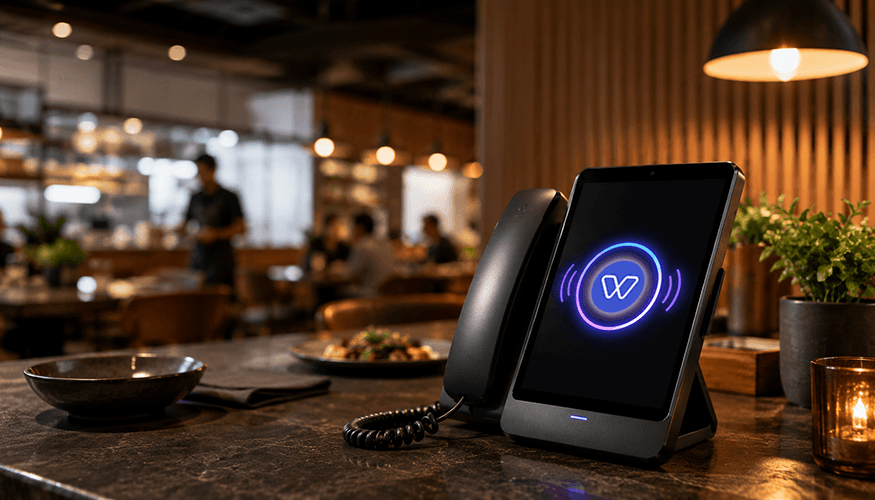
Quick answer:
An AI phone answering system for restaurants is a voice AI platform that answers every inbound call, understands what the guest wants in natural language, and completes reservations, takeout orders, and common questions automatically, day or night, then syncs the result directly into your POS and booking calendar. The best systems combine 24/7 coverage, smart call routing, real-time menu and knowledge base accuracy, and full call analytics, so no guest ever hits a busy line and no order gets logged twice.
Key takeaways

It answers calls using natural language processing, not a rigid phone tree, so guests speak normally and get understood.
It handles reservations, takeout orders, and FAQ handling, then syncs everything into your POS and booking calendar in real time.
It runs 24/7, which means after-hours and overflow calls get captured instead of going to voicemail.
Every call becomes data: call transcripts, analytics, and reporting show what guests actually ask for.
It escalates complex or sensitive calls to a real staff member instead of forcing every caller through a script.
A restaurant's phone rings the most at the exact moment nobody has time to answer it. During the dinner rush, servers are running food, hosts are seating walk-ins, and the kitchen is calling out tickets. Every unanswered call in that window is a reservation, a takeout order, or a loyal guest who hangs up and calls somewhere else instead.
That is the problem an AI phone answering system for restaurants is built to solve. It is not a glorified voicemail or a robotic IVR menu. It is a voice AI platform that picks up every call, understands what the guest needs, and handles it the way a well trained host would, without ever putting anyone on hold.
This guide breaks down what the technology actually does, how to evaluate one for your restaurant, and what results you should expect once it is live. If you want to see it in action first, you can request a demo at any point.
What Is an AI Phone Answering System for Restaurants?
An AI phone answering system for restaurants is a voice AI application that uses natural language processing (NLP) to answer inbound calls, understand the caller's intent, and complete the request automatically, whether that is booking a table, placing a takeout order, or answering a question about hours and menu items.
Unlike a traditional phone tree, it does not ask callers to press 1 for reservations and 2 for takeout. It listens, understands the request in plain language, and responds conversationally, the same way a front of house team member would if they had unlimited bandwidth and never got flustered during a rush.
Some restaurants use it as a full-time virtual restaurant host for every phone call. Others run it as a 24/7 AI phone agent for restaurants that only kicks in after hours or during peak call volume, so no guest ever hits a busy line.
How the Technology Actually Works
Every call follows a similar path, even though the conversation itself feels natural and unscripted:
- The AI answers and identifies intent. A guest calls, the AI voice assistant for restaurant calls greets them in your brand's tone, and figures out within the first few seconds whether they want a reservation, an order, or general information.
- It asks clarifying questions. Using NLP, the system confirms party size, pickup time, order details, or special requests the same way a host would, without making the caller repeat themselves.
- It checks live availability. For bookings, restaurant inbound calls automation AI pulls real-time data from your reservation calendar, including platforms like Formitable, so the AI never confirms a table or slot that does not exist.
- It logs the order or reservation. Once confirmed, the system pushes the information straight into your POS or booking tool through built-in automations, so nothing has to be re-entered by hand.
- It escalates when it should. If a caller is upset, has an unusual request, or needs a manager, the AI routes the call to a live team member instead of trying to force it through a script.
- It records everything for review. Every interaction becomes part of your call transcripts, analytics, and reporting, giving managers a clear record of what guests are asking for and how the AI is performing.
The result is an AI call centre solution for restaurants that behaves less like software and more like a dependable team member who happens to never take a break.
Why Restaurants Are Adopting AI Phone Answering Right Now
Three shifts are driving adoption faster than most owners expected a year or two ago.
Guest expectations have changed. Diners now expect an instant answer at any hour, and a missed call during the dinner rush reads as a bad first impression before the guest has even walked through the door.
Labor is tighter and more expensive. A restaurant customer service phone bot AI takes routine calls off the front desk so existing staff can focus on the guests standing in front of them, instead of splitting attention between the dining room and a ringing phone.
The technology finally sounds human. Early voice bots were stiff and easy to spot. Current voice AI for restaurant phone systems handles interruptions, accents, and casual phrasing well enough that most callers do not realize, or do not care, that they are talking to AI.
Core Benefits of an AI Phone Answering System for Restaurants
Coverage That Never Clocks Out
24/7 AI phone answering for restaurants means every call gets picked up, whether it is a lunch rush on a Tuesday or a catering inquiry at 11 p.m. on a Sunday. After-hours call answering with AI for restaurants turns what used to be dead time into captured reservations, takeout orders, and next-day bookings.
Lower Staff Workload During Peak Hours
When the AI absorbs routine calls, front of house staff stop splitting their attention between guests in the dining room and guests on the phone. This is one of the most immediate, measurable ways restaurants lower staff workload without cutting service quality. The same logic applies behind the scenes too: some restaurants extend AI call answering to staff shift swaps and call-in updates, so managers stop fielding scheduling calls on top of guest calls.
Faster Answers, Shorter Waits
A live host can only handle one caller at a time. Voice AI answering for restaurants can manage several calls simultaneously, which is a direct way to reduce wait times for restaurant phone callers, especially during the exact hours when hold times used to run longest.
Smarter Decisions From Real Call Data
Every conversation feeds restaurant phone call analytics AI that shows when calls spike, what guests ask about most, and how often a call turns into a booked table or a placed order. That data helps managers plan staffing and refine promotions instead of guessing.
Consistent, Accurate Answers Every Time
A connected menu sync and knowledge base means the AI never misquotes a price, forgets an allergen note, or gives a guest the wrong closing time. FAQ handling becomes reliable because the information source is always current, not whatever a rushed employee remembers.
From Call to Confirmation, on One Number
The moment a reservation or order is confirmed on the phone, most restaurants want the guest to get a text confirming the details. Because landline texting lets your existing restaurant number send and receive texts, that follow-up comes from the same number the guest just called, not a random short code. Paired with automated confirmation sequences, the whole flow runs on its own: the AI answers the call, confirms the details, and the text lands in the guest's phone before they have even put theirs away.
A Quiet Boost to Conversion
Because it never forgets to mention a special or suggest an add-on, an AI answering service to boost restaurant call conversion pays for itself in a way that is easy to track: more completed orders and reservations from the same number of incoming calls.
How to Choose an AI Phone Answering System for a Restaurant
Not every voice AI platform is built with restaurant operations in mind. When comparing options, look for these six things.
Reliability and coverage. Confirm it genuinely supports 24/7 operation, not just business hours with a fallback voicemail after closing.
Smart call routing. Good call routing AI for restaurants recognizes urgency, spots repeat callers, and can manage peak call volume without dropping anyone into a dead queue.
Ordering and reservation accuracy. It should integrate directly with your POS and booking calendar so confirmed orders and tables are always correct in real time.
A real knowledge base. The system needs an accurate, easy to update menu sync and knowledge base so answers about specials, hours, and allergens stay current as your menu changes.
Transparent analytics. You should get full call transcripts, analytics, and reporting, not a black box that just tells you "calls answered" with no detail behind it.
Brand fit. The voice, tone, and phrasing should sound like your restaurant, not a generic call center script. If you run a cozy neighborhood spot or an upscale dining room, the AI should reflect that personality on every call.
AI Phone Answering vs. a Human Receptionist vs. a Traditional Answering Machine
Here is how the three most common options actually compare on the things that matter to a restaurant.
AI PHONE ANSWERING SYSTEM | HUMAN RECEPTIONIST | TRADITIONAL ANSWERING MACHINE | |
|---|---|---|---|
Availability | 24/7, including holidays and after hours | Limited to shift hours | 24/7, but no live interaction |
Handles multiple calls at once | Yes, simultaneously | No, one call at a time | No, one message at a time |
Takes orders and reservations | Yes, synced to POS and calendar in real time | Yes, but manual entry and prone to error during rushes | No |
Answers menu and allergen questions | Yes, pulled from a live knowledge base | Yes, if staff has current info memorized | No |
Consistency of tone and accuracy | Same every call, no bad days | Varies with fatigue, mood, and staffing | N/A, no conversation happens |
Cost during peak and after hours | Fixed, scales with call volume | Requires overtime or extra shifts | Low, but calls go unanswered live |
Call data and analytics | Full transcripts, reporting, and trends | Rarely tracked systematically | None |
The gap is not about which option is "smarter." It is about coverage and consistency. A great host will always beat AI on genuine warmth in a single great conversation, but no host can be on every line at once during a Friday night rush or answer a catering question at 1 a.m. That gap is exactly what an AI phone answering system for restaurants is designed to close.
AI Phone Answering Across Different Restaurant Concepts
The same underlying platform adapts differently depending on what you serve and how you operate.
An ai answering service for cafes typically handles quick order confirmations, hours, and questions about seasonal drinks or breakfast items, where call volume is high but each conversation is short.
An ai answering service for pizzerias needs to manage topping customizations, delivery zones, and order minimums accurately, since a single mistaken topping is the kind of error guests actually notice.
A multi-location group benefits from a multilingual AI phone answering system for restaurants that keeps tone and information consistent across every site, regardless of which language a guest calls in. Groups running several locations also tend to consolidate onto a single business phone system, so call routing, analytics, and AI behavior stay consistent whether a guest calls the downtown location or the one across town.
Full service and fine dining restaurants tend to lean on the AI as a virtual restaurant host phone calls solution for reservations specifically, since that is where missed calls carry the highest cost per lost booking.
Measuring ROI: What to Actually Track
Once your automated phone answering system for restaurants is live, a handful of metrics tell you whether it is working.
- Answer rate. What percentage of inbound calls get picked up immediately, at any hour.
- Completion rate. How many calls end in a confirmed order or reservation rather than a hang-up.
- Deflection rate. How many calls the AI resolves on its own without needing a human.
- Guest sentiment. Whether callers rate the experience as clear, friendly, and efficient. Many restaurants track this with short post-call review and feedback requests sent right after the call ends.
Together these numbers build your restaurant AI answering ROI case over a few weeks, and they are the same numbers worth revisiting monthly as call patterns shift with seasons and promotions.
Getting Started Without Disrupting Service
You do not need to replace your entire phone system on day one. Most restaurants roll this out in stages: start with a single location or a single use case (often after-hours calls or reservation overflow), watch how the AI performs against real call volume for a few weeks, then expand it to full-time coverage and additional locations once the data backs it up. This kind of phased rollout is how a restaurant virtual receptionist goes from a pilot project to a permanent part of daily operations.
Why Restaurants Choose Whippy
Whippy built its AI phone answering service for restaurants around one idea: automation should sound like hospitality, not like a machine reading a script. The platform combines conversational voice AI with the kind of deep integrations restaurants actually run on, from reservation platforms like Formitable to ordering and loyalty tools, so every confirmed order or booking lands exactly where your team already works.
Whippy is bootstrapped and profitable, built by the co-founder of BloomNation, and now supports more than 1,000 paying businesses across industries that depend on fast, reliable phone communication. That track record carries directly into how the restaurant product is built: for real call volume, not a demo environment.
Whether you need a virtual AI receptionist for restaurants covering the overnight shift, a full-time voice AI for restaurants handling every call, or a focused solution for catering and private events, the system is built to scale with your locations instead of adding complexity to them. Whippy also connects with menu and ordering tools like Menu Tiger, so specials and pricing stay accurate on every call without manual updates.
See It Work on a Real Call
The easiest way to know if this fits your restaurant is to hear it handle an actual reservation or order request, not just read about it. No missed calls, no hold music, no guesswork about how it sounds with your menu and your hours.
Request a free demo and hear exactly how it sounds on your next call.
Frequently Asked Questions
Q: Does an AI phone answering system for restaurants handle multiple languages?
A: Yes. A multilingual AI phone answering system for restaurants can detect the caller's language and respond in it automatically, so guests get the same accurate, warm experience whether they call in English, Spanish, or another language your community speaks.
Q: Will it work with my existing POS and reservation software?
A: In most cases, yes. A properly built ai restaurant phone answering software integrates directly with common POS, CRM, and booking tools, syncing orders and reservations in real time so nothing has to be entered twice.
Q: Can urgent or VIP calls still reach a real person?
A: Yes. Call routing AI for restaurants can recognize repeat guests, loyalty members, or flagged priority calls and escalate them to a manager or available staff member immediately, instead of forcing every caller through the same flow.
Q: Can it be our main phone line instead of just an overflow option?
A: Many restaurants do exactly that. An AI phone answering system restaurant teams rely on as their primary line handles every call, day and night, while staff stay focused on the guests physically in front of them.
Q: Does it adjust automatically for holidays or special hours?
A: Yes. The system reads your business hours and updates greetings, availability, and messaging on its own, so a guest calling on a holiday hears accurate information without anyone manually reprogramming the system.
Q: Is an AI phone answering system worth it for a small, single-location restaurant?
A: Usually yes, since the core problem it solves (missed calls during rushes and after hours) affects small independent restaurants as much as large chains. The main difference is scale: a single location typically starts with one use case, like after-hours coverage or reservation overflow, before expanding to full-time use.
Q: Does AI phone answering replace restaurant staff?
A: No. It replaces the task of manually answering routine calls, not the people. Most operators use it to free up hosts and servers so they can focus on guests in the dining room, while the AI handles calls that would otherwise interrupt service or go unanswered.
Q: How long does it take to set up an AI phone answering system for a restaurant?
A: Most restaurants can get a basic setup, covering hours, menu FAQs, and reservation or order capture, running within a couple of weeks. Full integration with POS and booking systems, plus tuning based on real call data, typically continues for the first month as the system learns your specific call patterns.
Table of Contents
Table of Contents
- What Is an AI Phone Answering System for Restaurants?
- How the Technology Actually Works
- Why Restaurants Are Adopting AI Phone Answering Right Now
- Core Benefits of an AI Phone Answering System for Restaurants
- How to Choose an AI Phone Answering System for a Restaurant
- AI Phone Answering vs. a Human Receptionist vs. a Traditional Answering Machine
- AI Phone Answering Across Different Restaurant Concepts
- Measuring ROI: What to Actually Track
- Getting Started Without Disrupting Service
- Why Restaurants Choose Whippy
- See It Work on a Real Call
- Frequently Asked Questions
Try Whippy for Your Team
Experience how fast, automated communication drives growth.

Related Articles
EU AI Act: Whippy's Independent Bias Audit
 Elizabeth Long
Colorado SB 26-189: Whippy's Independent Bias Audit
Elizabeth Long
NYC Local Law 144: Whippy's Independent Bias Audit
Elizabeth Long
California FEHA: Whippy's Independent Bias Audit
Elizabeth Long
Illinois HB 3773: Whippy's Independent Bias Audit
Elizabeth Long
Best AI Recruiting Tools for Franchise Staffing
Elizabeth Long